
18
2012How Not To Write Comics Criticism
A couple of years ago my good friend, the writer Sara Ryan, did the world a favor when she put together a blog post series called “How NOT to Write Comics.” (Post one, post two, post three.) It’s a useful collection of tips and anecdotes to help aspiring comic book writers, with most of the information drawn (haha) directly from comics artists who have suffered at the hands of inexperienced, or incompetent writer-collaborators.
These posts were needed in part because comic books are still not a very dominant medium in the English-speaking world. Travel to France or Japan and you’ll witness a very different culture, where plenty of cartoonists rank in the creative elite, producing work that is both widely read and taken seriously by critics and scholars.
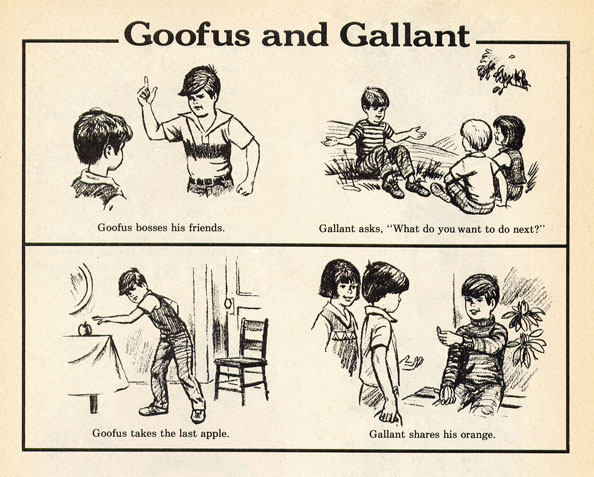
Yet many people in my part of the world still don’t really know how to read comics, much less create them. Sara’s posts provided a useful sort of “Goofus and Gallant” appendix to the ever-growing body literature on how to create compelling and readable graphic narratives.
However, one group wasn’t served by “How Not To Write Comics,” because this group is not interested in writing comics per se. They are interested in writing about comics – or their editors are forcing them to try. Because now that comics have infiltrated the mainstream book trade (and the reading lists of grownups) in the form of graphic novels, memoirs, and trade collections, an increasing number of critics are faced with the task of reviewing the damn things.
The results are, shall we say, mixed.
For every column inch of well-considered and well-informed discussion, there are fifteen yards of lazy, confused, condescending, clueless, unhelpful, and sometimes even frankly hostile copy.
Some of these critics are just jerks who resent that their editor has torn the galley copy of the latest Houellebecq novel out of their hands and replaced it with some stupid book with pictures in it. Pictures. Only Umberto Eco gets to use pictures!
I can’t help those people. I just feel bad for them, because they’re going to miss out on a lot of wonderful and important books.
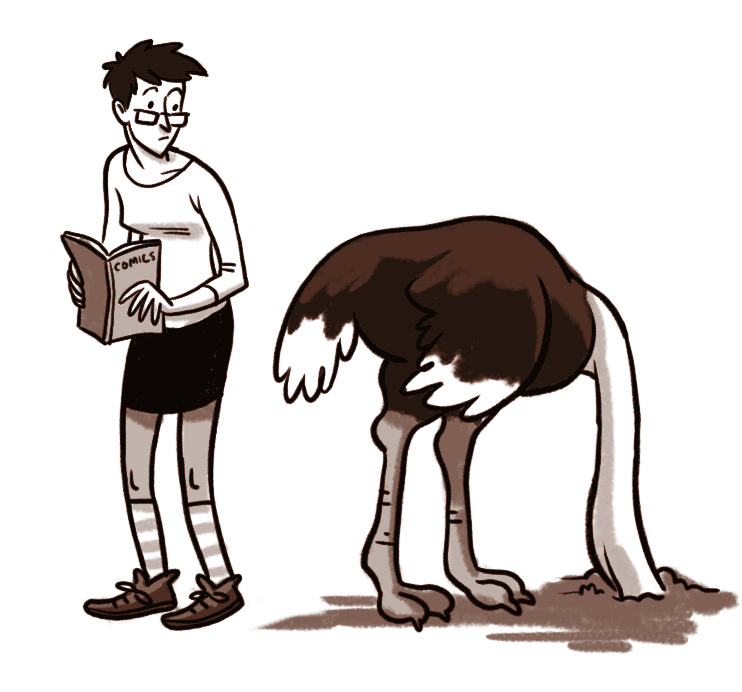
This leaves all the critics who are just beginning their journey into comics reading, or who have yet to be entirely won over to the medium but want to keep an open mind (perhaps due to peer pressure: I remember a literati cocktail party where somebody near me anxiously muttered “I guess we’re all supposed to read graphic novels now.”) These brave souls are willing to give it a try, but they tend to make a lot of mistakes when they first start out.
Certain errors needlessly recur in comics criticism. Encountering one of them in a critical review or essay is an instant signal to an informed comics reader that the writer doesn’t know what they’re talking about. There might still be some excellent insights on display, but those insights are diminished by sharing the page with outright errors.
Don’t get me wrong: there is plenty of room for interesting-but-still-arguable observations from outsiders, and even room for points best described as obviously-not-true-if-you-know-your-stuff-but-shows-genuine-effort. I don’t want to discourage original thought. But the sorts of mistakes I’m after in this post are not near-misses born from attempts to take on something new. They’re just unprofessional blunders.
Luckily, these mistakes are easily avoided with a little attention. This post is intended to help you, the critic, identify those mistakes in advance so they never hit the page. So, without further ado…I present to you my own personal….
TOP TEN COMICS CRITICISM MISTAKES
#1. Comics Aren’t For Kids Anymore
Used, often as a headline, with popular variant “Comics Aren’t Just For Kids Anymore.” This line is so notorious amongst comics folk that it is often referred to in acronym form (CAFKA).
Here’s the thing: comics haven’t just been for kids since, oh, the 1960s. Underground comics (“comix”) combined counterculture subject matter (sex, drugs, rock and roll, etc.) with some of the artistic techniques from syndicated newspaper cartoons, mid-century horror comics and animation. Virtually none of it is “kid-safe,” although I’m sure many contemporary cartoonists owe their vocations to surreptitious perusal of Mom and Dad’s poorly concealed collections of R. Crumb and RAW.
Furthermore, the sorts of comics that contemporary English-speakers often associate with “kid-friendly” reading – superhero comics – have veered towards an adult audience since the mid-1980s. Did you see The Dark Knight? The Batman movie where Heath Ledger drives a pencil into a guy’s eye-socket by slamming his head onto the table? That sort of thing happens in superhero comics all the time. ”Kid-friendly” titles are the exception, not the rule, and it’s been that way since I wore Osh Kosh B’Gosh overalls in size 3T.
So. Stop leading with this phrase; your news story is decades out of date.
As a related sub-genre, I sometimes encounter the critic who gives a comic book a bad review because the comic is (deep breath of smelling salts here) not for children. They are tripping along reviewing this strange little children’s picture-novel when OH MY LORD AND SAVIOR, violence (or worse yet, boobs)!
Certainly, some adult humans will be shocked to learn that they cannot simply pick up a comic book and hurl it at the nearest child. But you’re smarter than that, more sophisticated than that, and you don’t want to waste your precious critical energy on these people. They are too busy being upset about the internet.
In short: some comic books are for kids; some are just for adults. Plenty more will appeal to just about anybody. Comics are a medium, not a toy. The content – not the package – will tell you who should be reading.
#2. “Biff! Pow! Zap!”
Often used in conjunction with “Comics Aren’t For Kids Anymore.” Other, equivalent sound effects are common (SOKK! etc.), and variant headlines or leads include “Holy [insert word], Batman!”
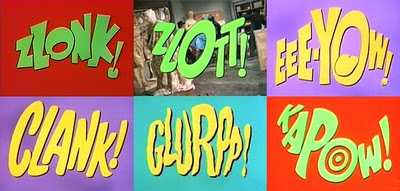
These phrases seem to derive from the 1960′s Adam West Batman TV show, which superimposed lettered “sound effects” during campy fight scenes; the “Holy [whatever], Batman!” was the Robin line that Burt Ward was forced to utter in endless variance. Neither of these phrases have much relevance to actual comic books (Batman or otherwise), and the datedness of the TV show reference is justification alone for avoiding these moldy chestnuts.
And, lest you cling to this language for some illusion of originality or catchiness, a quick Google search for “biff pow zap” turns up ALL of these headlines:
Bang! Pow! Zap! HEROES ARE BACK! - Time Magazine, 1986
Biff! Pow! Using comics to sell health law - Associated Press, 2011
Pow. Zap. Bang. How God makes your action-packed life like a superhero’s. - ChristianityToday.com, 2010
Pow! Zap! Physics? Prof. Jim Kakalios Spices Up Science with a Colorful Teaching Tool - People.com, 2011
and, perhaps most horrifying:
Biff! Pow! Judge Gives Jack Kirby Heirs One In The Kisser In Marvel Characters Ruling - Wall Street Journal, 2011
Likewise, I encourage you to avoid harping on these tired cliches:
- people who dress up in costume at conventions (they’re normal people having fun on their day off)
- the Comic Book Guy from The Simpsons
- anything along the line of “pale guys who live in Mom’s basement”
- any and all unbidden Star Trek or Star Wars references
Don’t go there, friends. We’ve already been.
#3. “With the box-office success of…”
EXAMPLE: “With the box-office success of The Avengers, comic books haven proven their appeal to a wide audience.”
In its most painful incarnation, this sentence will kick off a review of, say, an autobiographical memoir about the artist’s childhood in the slums of Bangladesh.
The point is: movies based on comic book properties are not necessarily relevant to all of comics. (Shocking though it may seem, many comic books have no direct relevance even to other comic books). Would you start a review of a literary novel with the sentence “With the box-office success of Twilight, novels have proven their appeal to a wide audience”? No, you wouldn’t, because (a) it’s patently silly and (b) it doesn’t say anything about the actual work you’re supposedly addressing.
If you must reference the recent blockbuster, a better approach might be something like “while Marvel Comics has sought out a wider audience by adapting its characters for blockbuster flicks like The Avengers, Publisher X has focused on fostering mature, original voices in non-fiction memoir.”
Give it your own spin.
#4. “Non-fiction graphic novel” OR ”this isn’t a comic book. It’s a graphic novel.”
This confusion was probably inevitable. The way people talk about comics has changed a great deal in the last thirty years. Let us try to set the record straight! God help us.
Comics (generally singular, despite the s) is the medium. You may also (though much less frequently) hear sequential art.
A comic is any complete work in the comics medium, regardless of genre or length. Rather like “film” or “poem.”
A comic book is, for the sake of definition, any complete work made in the comics medium that is long enough to involve several pages of material or have a collective title. If it were printed, would you have to staple it to keep it all together? Great. Let’s call it a comic book, then.
A graphic novel is a complete work of fiction in the comics form which, if printed, is long enough to be bound as a trade volume, so with a glued or sewn spine. (How’s that for arbitrary?) It is a novel, just as Jane Eyre is a novel, but it is told in comics, not prose.
“Graphic novel” is basically a very clever marketing term that allows booksellers, librarians, and other nervous adults to have a shorthand for “book-length thing of comics that we can sell for over ten dollars and doesn’t make you look like a pedophile for reading in public.” Unlike many people in the comics business, I don’t mind the (fairly new) term, because it’s done great things to convince people who aren’t avid comics readers that it’s okay to pick up a comic book now and again without fearing their book group’s scorn.
When people ask me what the difference is between a comic book and a graphic novel, I say that all graphic novels are comic books, but not all comic books are graphic novels. Then they look confused, and we change the subject.
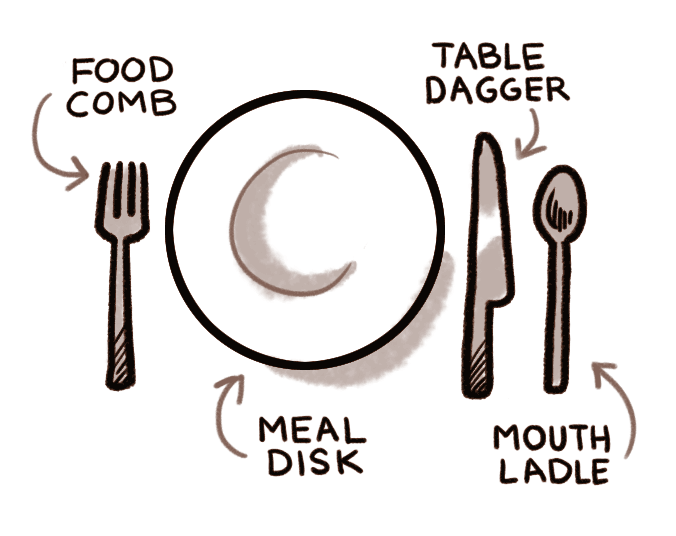
Hitch #2 inherent to the term “graphic novel” – the word “novel” implies “fiction” which is to say “stuff that didn’t actually happen to anybody.” While I have no sacred commitment to “novel” (since it originally connoted “sordid fad that is corrupting our women and children”), it is rather awkward and confusing to refer to something as a “non-fiction graphic novel” since this translates to “book-length work of non-fiction comics fiction.”
Even more awkwardly, thanks to the multiple meanings of the word “graphic”, if you remove the term “novel” and swap in a more accurate genre description, like “memoir”, you get embarrassing locutions like “graphic memoir” which can be mistaken to mean “prose memoir which involves lots of intense sex and violence.” (The Toronto Comic Arts Festival famously instructs its American guests to avoid using the term “graphic novels” at the border, since many customs agents hear “graphic” and think “pornography.”)
I have no good solution for this one, and nobody else has come up with a consistent reference. Eventually I’d love to hear “comics” replace “graphic” and thus hear about “comics novel” or “comics memoir,” but only time will tell. In the meantime, tread with caution and consult the oracles.
#5. Cartoon(y)(ish)/comic-book(y)(ish)
These words are frequently used, in comics criticism and in criticism in general, as stand-ins for “dumb,” “wacky,” “brightly-colored,” “outlandish,” and “lurid and kinetic with no intellectual or emotional core.” Friends: I challenge you to read David Mazzucchelli’s masterpiece novel Asterios Polyp and apply any of those descriptive terms to it. (Well, it is brightly colored, but there’s symbolism, so it doesn’t count.)
I think it’s fine to use “cartoonish” to describe a simple and exaggerated portrayal. That’s been in use for quite some time, since the heyday of illustration. And obviously the term is also acceptable to explain where on the spectrum of stylization an artist’s work falls - Persepolis by Marjane Satrapi is drawn in a style that is much more “cartoony” than, say, The Killing Joke (drawn by Brian Bolland, written by Alan Moore), which is far more “realistic.”
It’s also fine to use “comic-book-y” to describe a work that intentionally emulates a type of comics work; Lichtenstein, for example, was grabbing directly from comics sources, and there are plenty of movies that draw story and style inspiration from certain kinds of comics.
But it’s foolish to assume that the readers knows WHICH kind of comics you’re talking about. What you really mean is “this work is reminiscent of my personal stereotypes about a medium with which I’m obviously not overly familiar.” And you don’t want to write that, do you? Call out a specific type of comic – “reminiscent of Golden Age Marvel comic books, bright and punchy” or find another descriptor.
In the meantime, if you’d like a more in-depth discussion of the aesthetics and function of visual style in comics, pick up a copy of Scott McCloud’s landmark book Understanding Comics.
#6. Talk bubbles and picture boxes
Would you describe brushstrokes as “paint patches” or a song bridge as “transition verse?” Would you call a fictional plot an “event structure” or a pas de deux a “two-person dance?” No, you would not, because you’re a professional, and you make it a point to understand the terms that define the medium you are concerned with. Nor would you spend overmuch time in a review defining these terms for readers, since it behooves you to assume that they are already interested in what you are talking about (and are capable of looking up terms they don’t recognize).
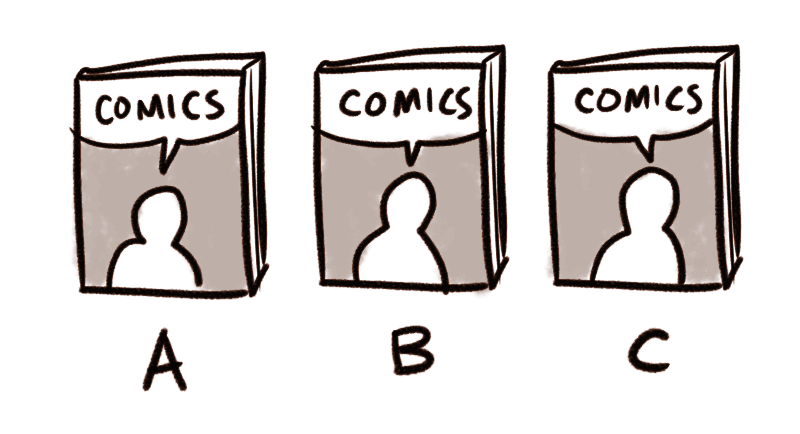
One of the most common errors is to mis-refer to the visual/textual device by which characters in comics traditionally “speak.” These are word balloons. A contiguous chunk of narrative text not uttered directly by a character but instead superimposed over the imagery is typically called a caption. Closed, discrete image units, which generally depict a distinct chunk of time or space – are panels. The spaces between panels are gutters. (Please, no puns; they’ve already been made.)
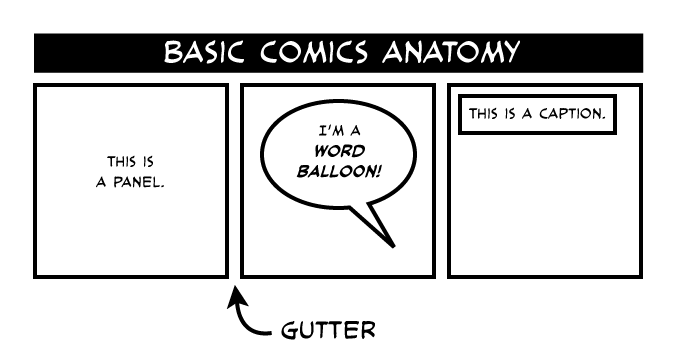
There are plenty of other terms – including many that are shared with prose and film – but those are the most essential. No neologisms required.
If you’re looking for some further reference on comics vocabulary (and you are), I recommend browsing the following widely-published titles, all of which are appropriate for a general audience:
Understanding Comics, Scott McCloud
Drawing Words and Writing Pictures, Matt Madden and Jessica Abel
The Complete Idiot’s Guide to Creating a Graphic Novel, Nat Gertler and Steve Lieber
#7. This muffin is so good that it’s actually a bagel
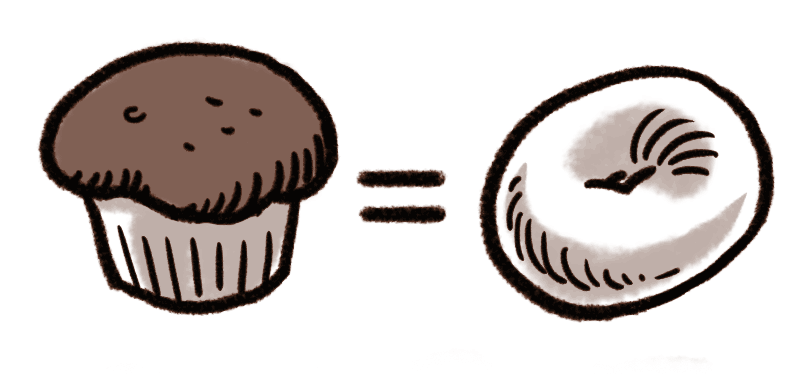
Oh, I do love this one, and by love I mean that it can induce me to hurl an otherwise a respectable publication across the room. In this case, the reviewer has been sentenced to read and then write about a comic book. There are two varieties, one seen mostly in smaller, local publications and blogs, and the other in publications of a hoity-toity bent.
VARIANT #1: I Don’t Come Here Often, But…
The first kind of reviewer undertakes her task with a great deal of foot-dragging and exculpatory phrases about how they aren’t “big graphic novel boosters.” Here’s a classic example, from a recent issue of the Seattle Times:
I, like many other rampant bibliophiles, am a reluctant reader of graphic books. Yet, a few pages into Alison Bechdel’s latest memoir, “Are You My Mother?” (Houghton Mifflin Harcourt, 290 pp., $22), I was hooked despite the comic-book format.
To me, all this paragraph says is “I’m reluctant to try anything that challenges my arbitrary habits, and I’m probably not qualified to review this book in a larger cultural context.” Or maybe (even less charitably) “Oh my gosh, I’m SO not that kind of annoying nerd! Please don’t dismiss my intellectual seriousness for liking this one comic book. If I convince other people to like it, then maybe I won’t feel so uncomfortable!”
I appreciate what the writer is trying to do – reach out to other reluctant readers. (Because that’s what you are in this case, kids: reluctant readers. Not “rampant bibliophiles.”) There’s really something to be said for a “come on in, the water’s fine” approach to convincing the status-anxious to pick up a new kind of book. But you’re not doing yourself or those readers any favors by wincing your way through your appraisal of the work at hand. The most ”rampant bibliophiles” I know don’t dismiss a potentially great book just because of its format or genre.
So instead of making yourself look narrow-minded, why don’t you just open your review with praise of the book, as you would for any other title of merit? Then, if you’re worried that people will be hesitant to read on, emphasize that the material has the potential to be both accessible and appealing to prose readers.
VARIANT #2: Green Eggs and Ham
Not all writers are well-intentioned, of course. Some of them see themselves as arbiters of high culture and comics as a party crasher.
This sort of person seems to look forward to writing a vicious takedown. He opens with some flippant references to a legacy newspaper strip like Hagar the Horrible or a sniffy description of the manga collections that his teenaged niece reads in a corner at Thanksgiving while the grown-ups quaff sherry and discuss matters of international diplomacy.
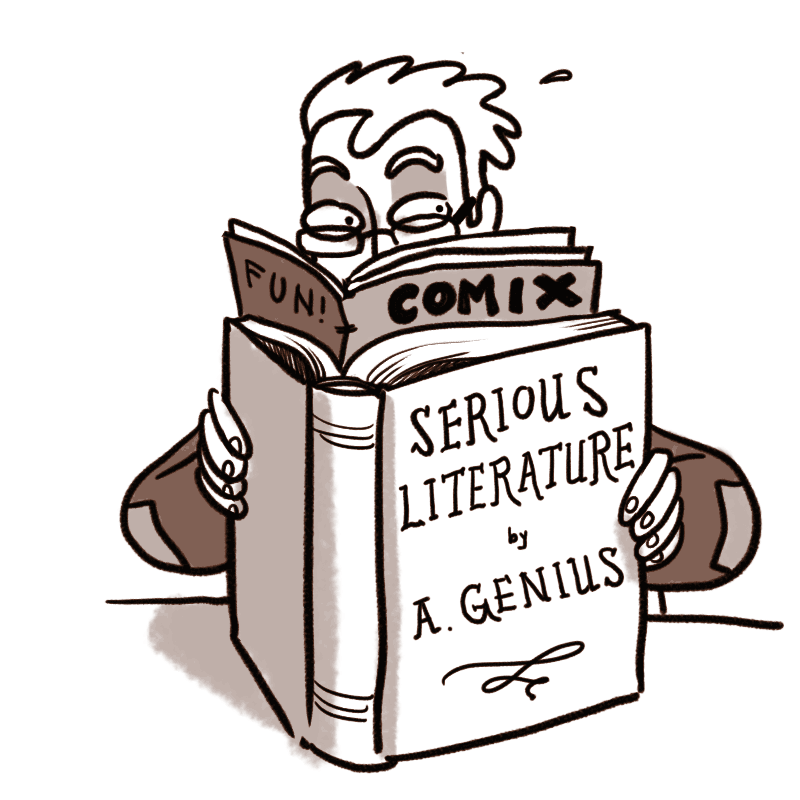
Now that the critic has safely established that he’s not one of “those” people, he brings up the actual comic book he’s been paid to read. To his infinite horror, he finds that it is pretty good.
There will be a few stumbling paragraphs of praise – why, this is reminiscent of fine literature! The pictures and the words combine to create meaning beyond what each individually represents!
And then there will be a stunning piece of rationalization.
Because this comic book is really good, it must not ACTUALLY be a comic book.
(Or, this comic book is so good, it doesn’t seem RIGHT to call it a comic book.)
There are certainly examples of work that exists to comment on its own form or genre – deconstruction, meta-commentary, appropriation, satire; pick your Trojan horse. It it work that takes on a form just to piss on that form. Every medium has its anarchists, and being able to recognize that intention is a valuable critical skill.
But just because something is better (in your opinion) than many of its peer works does not mean that it is a commentary on its medium, or that the medium ceases to apply. The critic’s assumption that “comic book” connotes “low culture” doesn’t make the work at hand any less of a comic book, or any less of an artistic achievement.
All you’re doing with this kind of rationalization is revealing your own discomfort about liking something you don’t think you’re supposed to. Which is ridiculous. This is comic books, not heroin or blood diamonds or Celine Dion.
#8. Comics: A Bold Artistic Choice for a Cartoonist
The reviewer observes that the cartoonist in question has, in fact, produced something very good, and perhaps not typical of the reviewer’s notion of what a comic book is like. The reviewer acknowledges that the comic book creator is, in fact, a first-rank talent – somebody whose abilities could potentially shine through in other media, as well. (She’s not comic book pretty…she’s literature pretty!)
From this, the critic concludes that the creator is, in fact, making a bold artistic choice by composing her work in this medium. How brave of her – and what does it mean? What is the significance of this choice for the story? Why isn’t it a novel, or a screenplay, which are things that grownups make? If David Mitchell took up macramé the critic would hardly be less perplexed.
The critic will think all these things in apparent ignorance of the fact that the creator in question has been making comics - exclusively comics - for her entire career. She is not a prose novelist in a cartoonist suit for an evening. She is, in fact, a cartoonist. She might be making bold artistic choices within her chosen medium, but comics aren’t a “choice” any more than it’s a “choice” for Steven Spielberg to make a movie.
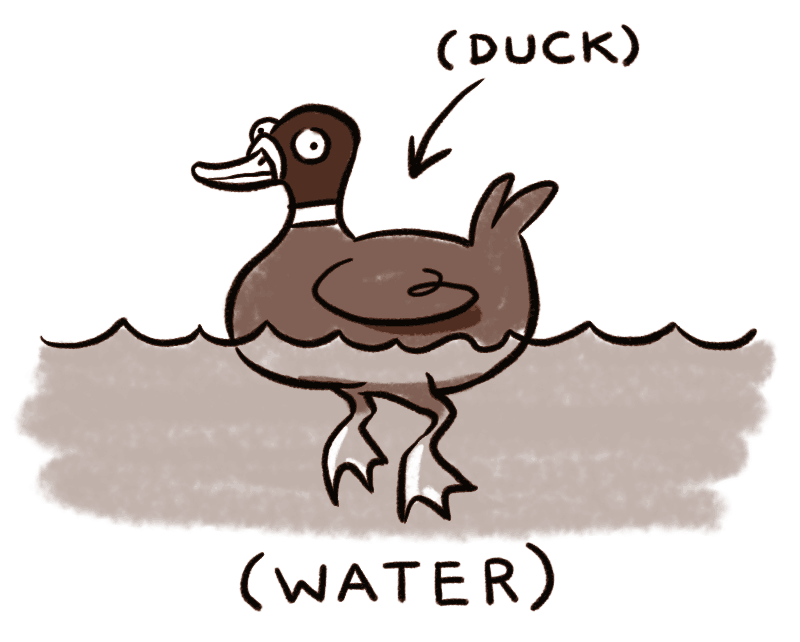
There are indeed cases where a creator works in several media, and chooses to work in comics for specific story or audience reasons. This is more often true of creators who provide just the writing or just the art and create comics as part of a collaborative team. And some creators genuinely do “moonlight” in comics, as a side venture within a career focused elsewhere.
There’s a simple way to determine which kind of creator you’re dealing with: Google them. Look up their work. Figure out what the comics-to-other-stuff ratio is.
Then decide if what this creator is doing really constitutes a “bold artistic choice,” or merely what she was born to do.
#9. The Unbearable Lightness of Word Balloons
A related genre of critical overreaching. The critic encounters standard elements of comics work – word balloons, square panels, standard layouts – and immediately interprets them as meaningful to the content of the work.
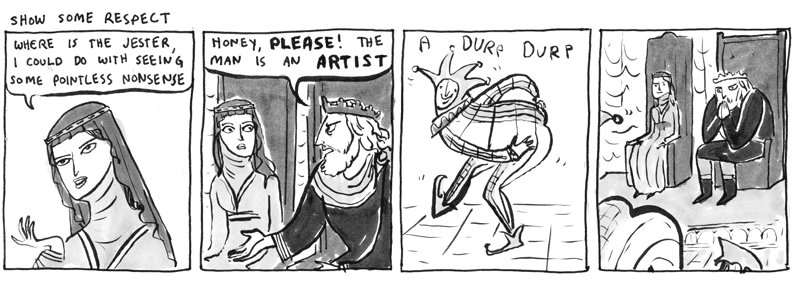
- Comic by Kate Beaton; see on her site, buy on Amazon
This is another example of the critic’s own ignorance coming out to play. Imagine if a critic wrote (of a prose novel) that “the straightness of the lines of text reflect the narrator’s matter-of-fact perception of the word, and the ordering of the letters from left-to-right functions as a subtle reference to his growing political conservatism as he comes of age over the course of the novel.”
This would be silly. Likewise, a painting executed on a rectangular canvas is not automatically assumed to be commenting on the nature of the rectangle. There are plenty of formalist experimenters in comics (pick up a Chris Ware title and watch him go). However, the odds are that the book you’re reading is one of the other 95%, the kind of work that uses standard formal elements as a vehicle for subject matter beyond the borders of the medium itself. The form is meant to become invisible, or at least not draw more attention to itself more than is necessary to enjoy and understand the work.
The only cure for a critic prone to over-analysis is to read enough comic books that it becomes clear when a formal element is routine, and when it’s being used more creatively. Tough break, right? But, in comic books as in everything, you have to walk before you can run.
#10. Poverty of Reference
Another error bred by too narrow a reading list. A critic reads a comic book (“Book A”) and finds some aspect of it striking. The critic has only read one other comic book (B). The critic then adds two and two and gets seventeen: clearly, Book A is deeply influenced by Book B. This leads to a lot of bizarre attributions that seem less like comparing apples to oranges and more like comparing apples to Kevin Bacon. Surely you must see the clear influence that Spider-Man has had on MAUS!
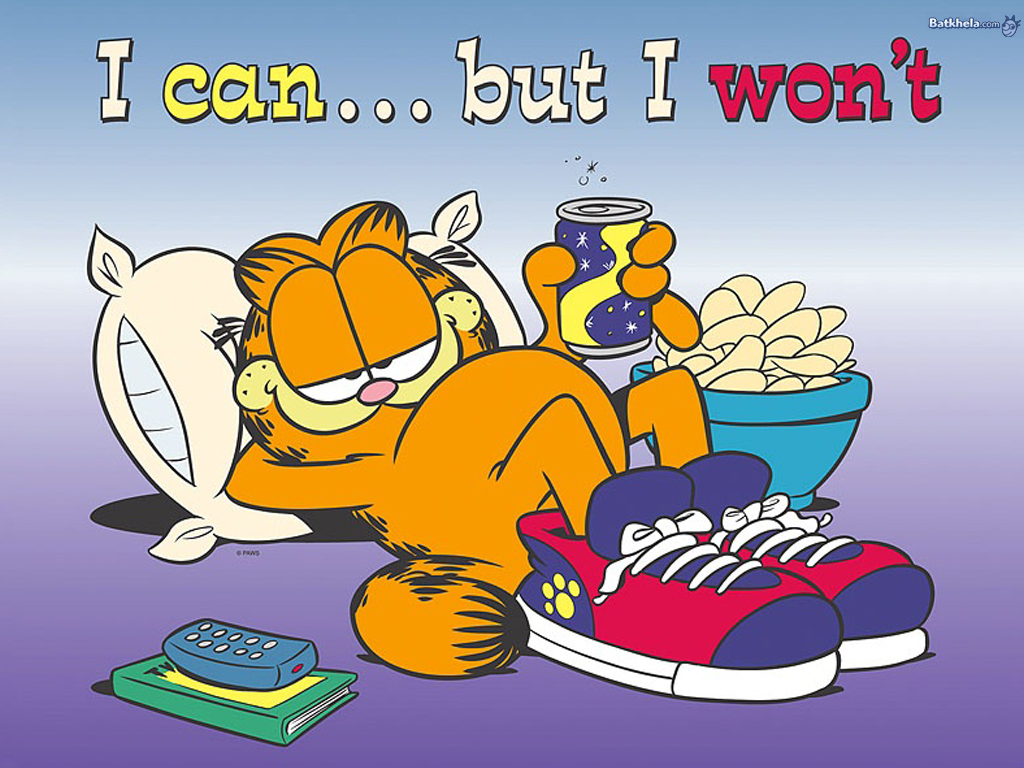
Alternatively, the critic can’t stomach the thought of referencing other comic books at all, or can’t remember even a single one (I once met a graphic arts professor so impressed with himself that he claimed not to have heard of Garfield).
So she spends the entire review talking about nothing but prose work and fine art, etc., as if the cartoonist had invented an entire new medium from the leavings of greater art forms.
Comics in their current form are a tradition dating from the 19th century – like film and the modern novel – but static-words-and-pictures-telling-a-story-in-sequence are as old as words and pictures and nearly as old as sequences; to express such surprise at the notion implies that you’ve been asleep at the critical wheel.
So, yes, Alison Bechdel was very much informed by themes from Proust’s writing when she created her memoir Fun Home. But she also took a lot from Charles Addams, the cartoonist of The Addams Family; she even mentions it in the book itself.
Cartoonists are, in general, not very prejudiced when it comes to their influences. Most of my peers are voracious readers, watchers, lookers, listeners, and players, mostly unconcerned with labels of “high” or “low” so long as the stuff on the menu is good. We don’t collectively put much stock in work that preens over its own elite inaccessibility (having too often been the victims of snobbery in academic settings), but nobody is going to be shunned for liking something and making use of it in their own work. You will quite possibly see the influence of Star Wars and the influence of Ezra Pound sharing a table at your local convention.
But we also come from a rich artistic tradition with plenty to say for itself, and we all owe an explicit debt to the comics creators before us. Their work is our inspiration; their rules and expectations are our challenge.
So you don’t get to pick and choose Alison Bechdel’s influences; Bechdel already did that for herself. The same goes for every other comics creator who strives for original expression. If you can’t acknowledge our full creative heritage, you can’t fully appreciate our work.
Now go forth, to love and serve good books!
So, in review.
If you’re reviewing a comic book, you need to review it in the context of works that are relevant to the one at hand, and you need to make sure that the story you’re telling about it is up-to-date. If you have trouble with this – you haven’t read anything even faintly like this book before and have no idea where it came from, then you need to put in a few hours of research.
- Magical secret #1: comic books are a really quick read. Reading “Great Expectations” will take you twice as long as it would take you to get a quick, serviceable survey of the underground comix movement. Librarians, the internet, your twelve year-old neighbor, and comics retail professionals – to say nothing of the creators themselves, who often have websites and give interviews – will all gladly help in ridding you of that certain je ne sais quoi I’m talking about.
- Magical secret #2: comic books can be truly wonderful. They can also suck. A (very earnest) librarian once asked me how you can tell if a comic book is “good.” I was briefly dumbstruck by the question. I had to tell her that you figure it out the same way as you do with a prose book – you read it, or you read reviews of it, see if it’s won awards or been recommended by organizations, ask friends, see what’s circulating. If you pick up a comic book and you don’t like it – think first “this is probably a bad comic book.” Not “comic books are probably bad.” Can you imagine if a professional acquaintance of yours grabbed a novel at random from the Goodwill book bin and judged all of literature by it?
You wouldn’t be a paid critic if such minor roadblocks as a new genre or a bad book got in the way of your reading habit. It’s your job to tell us, the clueless schmoes of the reading public, if something is worth picking up or not.
When I read a negative review, I want to know what’s wrong with the book, not what’s wrong with your relationship to the medium. Likewise, in a positive review, I’m not looking for a blow-by-blow account of your realization that comic books can have cultural value. I already know that they do; I’m hoping you’ll tell me why this particular comic book has cultural value.
All I want is for you to write a review that I can respect. You can do that by writing a review that respects me, as a reader and a creator.
Because I really need some new reading material. And I’m hoping you can help.


MaggieDreadful
This article is great. I’ve encountered a lot of these cliches just talking to people about comics. I’ve found it very difficult trying to explain to people what “graphic novel” actually means.
Jon
This is a fantastic article, but now I’m committed to spreading the use of the term “table dagger” everywhere I go from here on out. I learned it from watching you!
Angelina
AMAZING.
Rob Salkowitz
Useful and cautionary advice – thanks! As someone who tries to write intelligently about comics, some of these landmines are more familiar than is comfortable
. Quick note on point 2: writers don’t usually write the headlines that appear with their stories. “Zap! Bam! Pow!” is usually the affectation of a lazy editor and can be as cringe-inducing for the bylined writer as for the readers.
Dylan
Indeed – I’ve been the victim of Bad Editor Headline Syndrome myself. My hope is that this will discourage bloggers and other folks who write their own headlines from using the title, and will give publication writers ammunition for saying “Here’s the piece on Alan Moore; p.s. my sources say “pow biff zap” is a no-go for lead, thx”, and will likewise give annoyed readers/commenters something to point at to discourage publications from using it.
Kristina
I’m kind of glad to read something like this, though it makes me sad that it’s a prevalent enough issue that the article needs to exist. Most of the points listed apply not just to comics writing, but any kind of writing. It just feels like common sense. I run into this all the time as I also write about figures/statues/collectibles, and have to try and be fair even if I don’t particularly dig the source material (anime, comic, movie, game in question).
Either way, I found it helpful since I blog books and things in my own time, and am preparing to write about the comics I’ve been picking up as well. Granted, my scope is rather limited as I used to read much more comics when I was younger, but New 52 titles got me back into it now and I like the idea of sharing the experience. Of course, I’m reading other books that aren’t necessarily New 52, but they essentially pulled me back into being a regular subscriber at my local comic shop.
Thanks for writing this — I’m glad to know that I could be one less writer asserting herself as a “big, responsible grown-up who’d never go for comics as they’re for kiddos and read fancy literature instead” by simply following a few hard rules.
Christopher Grimm
This essay is both informative and enjoyable. Thank you very much.
Federico
Brilliant write up here.
Its quite often to see content like such be dismissed solely due to “lowly” qualities such as illustration. But here’s me hoping we’re slowly phasing that out.
Again, good write up, and good read.
Dainty
While I thoroughly enjoyed the article, I severely cringed at the line “je ne sais quoi I’m talking about” – what is it even supposed to mean?
Dylan
Hi Dainty! It’s just my little joke about how people sometimes think they’re being sophisticated by demonstrating their ignorance about something, but really it only makes them look silly.
Rick Worley
Ah, it feels good to read that. Now there needs to be a companion article explaining some of those same things to fans who say they’re fans of comic-books, but actually are only fans of superheroes. They think they’ve read a lot of issues of Spider-man, so they’re an authority on comic books, as opposed to what they actually are, a person obsessed with Spider-man. A lot of those people write for comic-book websites, and they think they can comment on anything with words and pictures in it, including things in the world of visual arts that aren’t comics. It’s like somebody who has only ever read Sherlock Holmes novels in their life deciding to teach a class on Tolstoy- “I’ve read a novel before, I can talk about that!”
Alexa (Ladies Making Comics)
I took a “Graphic Narrative” class in college from a professor who had only been reading comics for two years, and still suffered from many of the mental blocks that Dylan addresses above.
It was painful.
Sophie
Did/do you go to school in a grey northern city? I attended a lecture by a similar professor and had to walk out before the Q&A.
Dylan
I went to Wesleyan University; I will leave the culprit unnamed. He was a real dragon!
Sofia
This is awesome. Thank you!
Chris Schweizer
Wonderfully written, very informative article. Thanks for taking the time to (hopefully) give future reviewers the ammunition with which to write useful reviews.
Sandy
Great article!
Do you have a favourite comics reviewer? I’d like to read (and encourage!) good reviewers.
Dylan
I’m a big fan of my friend Douglas Wolk and his writing; he is smart, omnivorous and fair.
Vicky
This article is basically perfect, and really sums up a lot of problems people clearly have with discussing comics in general, let alone specific ones. Bookmarking this for re-reading later, because this definitely seems like an article worth memorising and pointing out to others.
Spencer
Incredible Piece. Thank You!
Jon P
I feel like another common trope in comics critique, similar but distinct from #1, is someone saying “Yes, it’s a good story, but it’s not funny and comics are supposed to be funny.”
Kira
This is great! As someone who is just starting to read graphic novels I’m glad to see I haven’t been guilty of any of these.
A note on #4: I work at a library and any nonfiction comics we have are labeled “graphic nonfiction”. I think that term works pretty well, given that other books are split by fiction/nonfiction…these are just either fictional or nonfictional works told through graphics.
Dylan
I like it! I’m always excited when I see libraries whose comics collections are thoughtfully categorized and displayed.
Tom
I despair when i go to my local library – all of the ‘graphic novels’, ‘trade collections’ etc are in the humour section. They obviously have no idea of the content of some of the books on that shelf – i think i have only seen one book that they have that i would classify as humourous. They do have work by Maus, Warren Elis, Garth Ennis, Ed Brubaker etc – so a lot of ‘graphic’ violence, sex and swearing – i’m just waiting on and adult picking up a ‘humourous comic’ for their kid and all hell breaking loose when they get it home. I have spoken to the librarians but deaf-ears prevail.
Excellent article – i will be passing it around.
Kip W
In 1980, our local newspaper somehow decided to do a story on my roommate and me and all the comics we had collected. Using your guidelines, they creatively titled it “[#2] [#1].” It felt like a cliche even then. (I managed a comic shop from 1975 to 1976. Maybe I heard it all then.)
John Jackson Miller
After doing countless mainstream press interviews about the business that wound up printed under the CAFKA or “Biff, Pow” headline — I greatly appreciate this column. And the movies-to-comics thing is the topic of every other call I get from a reporter these days. I think it’s just such an easy assignment for an entertainment desk to make.
On the terminology style, for a long time at Comics Buyer’s Guide, we tried to maintain a distinction between original graphic novels and collected editions; I have continued that at my Comichron research site, though I admit that ship has sailed. The reader doesn’t need to know that Watchmen came out as individual monthly chapters, but it’s good for would-be publishers to be aware of. Several prose outfits in the 2000s jumped into publishing original graphic novels, not realizing that serialization is built into the profitability model for most comics. There’s a business reason more than 90% of the books on the “graphic novel” shelf are collected editions. So the distinction has relevance — but probably not to the mainstream audience most of these reporters are talking to.
On a similar score, for what it’s worth, our stylebook at CBG for more than 30 years held that “comic” should never be used as a singular, unless you’re referring to Jerry Seinfeld. Something was either a comic book or a comic strip; “comics” is what appears on the page. But “webcomic” blurred that, and I think that’s another ship that’s put out to sea.
Gary C
That was great. No one who has read one or even ten novels would be allowed to review literary novels – a proper reviewer should be totally familiar with the medium.
Slager
I can count the number of printed comics I’ve read on both hands, but I totally agree with everything above. Especially the bit about being able to like and draw influence from both the “high” and “low” arts. I have George Orwell sitting next to Star Wars novels on my bookshelf.
M.S. Patterson
Brill as usual my dear.
Also very humorous.
I personally have gotten to where I can’t stand the “low” and “high” art thing. It just makes me want to slap whoever is going on about it in their tightly pursed little pretentious mouth. Grr.
Andrew Farago
Shaenon and I were talking to Mo Willems once, and he said that he disliked the term “graphic novel,” since it’s so rarely applied to something that he’d consider a novel. Lots of memoirs, lots of genre fiction, but rarely novels. I think the most accurate term we settled on was “fat comics,” but I don’t think that’s going to catch on anytime soon.
Dustin Weaver
Well put, Dylan.
You are making the world a better place.
Nika-N
Lovely article, hopefully more reviewers and critics come around and read it.
David Marshall
Shitty articles about comics, usually spurred by a successful superhero movie, is a relatively small casualty in the overall decline and corruption of jouralism. That said, the Batman sound effects are still annoying. Thanks.
Scott
Great read! I particularly appreciated the non-fiction graphic novel conundrum.
On the other hand (sorry – this is going to be a bit long), as a long time comic fan I have to respectfully disagree with what ultmately you settle upon for the definition of graphic novels: “A graphic novel is a complete work of fiction in the comics form which, if printed, is long enough to be bound as a trade volume, so with a glued or sewn spine.” You yourself identify that nowadays “graphic novel” is really more of a marketing term. A collection of previously released, single issues of comic books bundled into a larger grouping is a “trade paperback,” really. To qualify as an actual graphic novel, the work in question needs to have aways been always intended as a single, standalone piece of work. The Watchmen for instance has been consumed in its trade paperback format so exclusively that most of its readers are unaware it initially existed as a limited, monthly comic book series. I’d even object when people described it as a graphic novel.
It does seem like the “comics” description you outline could have considerable utility in this area.
Thanks for a great article!
Dylan
That’s a little what I was going for when I said “a complete work of fiction” – a unified piece of storytelling with a beginning/middle/end. I thought about discussing “collections” as well, but when I got two paragraphs in and found myself talking about the serialization of Dickens novels I made an executive decision to leave that debate for another day.
I think most reviewers who have to tackle a comic book and feel out of their depth are going to be reviewing “literary” (oy) or youth market volumes, or collected works with a unified story like “Watchmen” (or, say, “Box Office Poison”) that, in bound form, are going to be indistinguishable from one-off graphic novels to the average reader. How much does distribution system matter vs. authorial intent and does anybody really care if all they want is to be able to read the whole story between two covers (or in one download)?
Either way, it’s clear that “graphic novel” is a very poor term for taxonomic purposes, but a great PR tool. Like how everybody sells prunes as “dried plums” these days.
Nat Gertler
Whenever I get into the “graphic novels are not necessarily novels” discussion, I always point out that most comic books are neither comic nor books. Misleading terminology is our heritage!
A good piece, Dylan, and I wish you luck in having it seen (and understood) by the people who should see it.
Comics! Foxes! Literary criticism! « Stowell's Cosmology
[...] http://www.dylanmeconis.com/how-not-to-write-comics-criticism/ [...]
Peter S. Conrad
Like many other comics lovers, I read prose only infrequently
But holy moley, this is a cogent, well-written, much-needed, light-hearted, informed, enjoyable essay. Wow. Gonna go share this on FB now.
Jabberwocky
This written article is in fact SO GOOD that I’m tempted to say it’s actually a comic!
Afternoon Bites: Inside “Joseph Anton,” Patton Oswalt in Bushwick, Dylan Meconis on Comics Criticism, and More | Vol. 1 Brooklyn
[...] Dylan Meconis on ways you should not write comics criticism. [...]
Scott Peterson
“All you’re doing with this kind of rationalization is revealing your own discomfort about liking something you don’t think you’re supposed to. Which is ridiculous. This is comic books, not heroin or blood diamonds or Celine Dion.”
Critic Carl Wilson wrote a fascinating book about the concept of taste and why we’re not supposed to like Celine Dion. Well worth investigating.
http://www.amazon.com/Celine-Dions-Lets-Talk-About/dp/082642788X/ref=sr_1_10?s=books&ie=UTF8&qid=1348080077&sr=1-10&keywords=what+we+talk+about+when+we+talk+about+love
(GREAT piece, by the by.)
Lisa Jonte
“I once met a graphic arts professor so impressed with himself that he claimed not to have heard of Garfield”
That was my figure drawing professor in college. Would that I had been as articulate in my defense of comics then as I am now, or as you have been here.
In any case, I love this post so much I just want to hug it and feed it cookies.
Nentuaby
Is “Word Balloon” really the only common standard? I’ve heard “speech bubble” from a *lot* of sources who seem like they’d know.
Dylan
I’d say speech bubble is an acceptable alternative, but word balloon is more common.
John Scialli MD (forensic psychiatrist)
Off topic, however people may like the follow-up to Fig. 1 above:
Gallant died at age 52 of autoerotic asphyxiation following his 4th divorce and 3rd coronary. His two sons, although united in hatred for the old perfectionist, remain in litigation over ownership of his liver the fat content of which is said to rival that of the gavaged geese of Strasbourg.
Goofus and his wife of 43 years, the former Mabel Timbertoe, are retired and spend part of the year with each of their six children and multiple grandchildren, while distributing the earnings of their charitable Foundation. Goo’s numerous patents reflect his flair for innovation and open-mindedness, which as a child were mistaken to be signs of impulsiveness and thoughtlessness. He has forgiven his late brother Gallant for the murder attempt.
Eric Lindberg
Absolutely brilliant article! So many of these cliches aggravate me to no end (especially the “biff bam pow” nonsense). As both a fan and writer of comics, I hate that the medium is still perceived this way by many people. For all the progress it’s made over the years, it still gets treated like the red-headed stepchild of literature. I only hope that this article reaches the critics and casual readers that it’s intended for.
Roger
I like the piece is general, but it seems a little too perfectly symptomatic that your defense of the smartness and depth of comics against people who use “comic-bookish” to mean “dumb” is illustrated with a panel from Asterios Polyp that *misspells* Nietzsche’s name.
Dylan
I might argue that it reflects worse on the copyeditor at Pantheon.
Jessica
I really like “This muffin is so good it’s actually a bagel.” I see this happen not just with comics but sci fi all the time and it drives me crazy.
Nick Mullins
This is great. I really love the illustrations, too.
#1 and 2 aren’t as common as they used to be, I don’t think. But I see, or hear, number 8 all the time. “So why comics?” the interviewer asks perplexed. Because I’m a duck and ducks do swim.
Along the problem with the word “graphic” in graphic novel, I once made the mistake of telling someone I created comics books for adult readers. She immediately thought I made porn.
James
Not that I necessarily disagree with any of your points, but this article would have been dramatically improved by the inclusion of more direct quotes and links. As it stands, it feels a little bit straw man-y.
Dylan
A fine point, and one I struggled with in writing this. I had to ask myself whether the priority of the post was to vent my own frustration and nail specific writers or publications for biffing it (and give readers a weapon with which to bludgeon future transgressors), or to provide a snarky-but-instructional guide to the writers who want to write well about comics.
After sending drafts to a few readers whose livelihoods DON’T depend on the comics industry, I decided that it was more important to extend a hand than slap wrists; particularly when so many of the articles which drove me crazy in the first place were written by people of fundamentally decent intention. It’s not always easy to sell a feature article about a funny-book in a media environment that increasingly demands pandering conformity from its content authors, and I didn’t want to piss on people without knowing the story behind any individual feature.
As a creator and reader, it benefits me nothing to give any specific author the impression that their first, imperfect foray into writing about comics was WRONG and that they should therefore NOT WRITE ANOTHER WORD until THEY ARE SURE THEY CAN GET IT RIGHT. And, more cravenly, I fear the possibility of inadvertently burning a bridge with a writer or publication who might have otherwise considered my own creative work as subject matter someday.
If somebody reads a flawed article and replies to it with a note saying “This seems like #8 from this widely-circulated post about problems in comics criticism. Consider avoiding this language next time” rather than posting a snotty one-liner or sighing glumly and clicking on the next link, then huzzah.
But, in the interest of further discussion: here are links to two articles that I find both interesting and frustrating, and that partially inspired me to write this essay; the writers clearly put much thought into writing them and had a fair amount of editorial leeway. I will leave it to readers to form their own opinions about how these pieces could have been improved in ways I discuss in this post.
Not Funnies, Charles McGrath, New York Times, July 11, 2004
Drawn From Life: the World of Alison Bechdel, Judith Thurman, The New Yorker, April 23, 2012
And I more than welcome links from readers here in the comments that might serve as handy examples.
SI Rosenbaum
ahahaha, this is so awesome, Dylan.
I remember having a conversation at a party about how to talk to people about the comic you’re reading and making when they have no idea about comics outside of superheros and funny animals. My solution was just to follow the word “comics” with the word “about.” “I’m reading a great comic book about French-Canadian history, and I’m working on one about anthropologists in Papua New Guinea.” Thus you preempt a whole chunk of the inevitable conversation. When I write about comics for thephoenix.com, which is fairly often, this is the method I use to bring non-comics readers along with me, too.
Dylan
That is super aikido! LET THE MOMENTUM OF HOW INTERESTING THIS IS BRING YOU ALOOOOOOOOONG
m . a . noregna
Superb article Dylan. Can i make a Translation of this to spanish? With total credit for you, obviusly. There are some things that need massive spread and being in a country, yet young on the comic medium but willing to embrace it (Colombia) this comes in as very useful. Un abrazo.
Dylan
Of course! Post a link when you finish.
rabahjam
I live in Switzerland and have been in France and Belgium as well… these have to be the most obvious mistakes anyone can make, you’d never read anything like that over here. I’m actually shocked to hear these clichés still exist.
Jeremy Barlow
This is fantastic, Dylan, and all of it needed saying. Thanks for being the one to say it.
Jessamyn
Thanks for this. A friend (not Sara Ryan, surprisingly) read it and said “Hey we should write one of these about librarians” and so I did.
http://www.librarian.net/stax/3920/how-not-to-write-about-libraries-some-guidelines-for-reporters/
Dylan
What a great article! LIBRARY LOVE.
Corin
Well said–you’ve hit several nails on the head. Nails that needed hitting.
A Few Friday Morning Links « Gerry Canavan
[...] * How not to write comics criticism. [...]
Comics A.M. | Dave Gibbons on digital; Stan Lee cancels appearance | Robot 6 @ Comic Book Resources – Covering Comic Book News and Entertainment
[...] Advice | Is there a way we could have this appended to the AP Stylebook? Fresh from her stint as an Ignatz Awards juror, Dylan Meconis has a great post on the top ten mistakes that writers make when writing about comics. Most of them are rookie mistakes, the sort you see when reporters who don’t really know the field try to write about comics, but it has plenty of good advice for all of us. [Dylan Meconis] [...]
Links for the Day: Emmy Predictions, How Not to Write Comics Criticism, NYPD and Protesters, New Cinema Scope, MSNBC Tops Fox News, & More | The House Next Door
[...] not to write comics [...]
How not to write comics criticism – JanerBlog v2.0
[...] you read this essay by Dylan Meconis? If not, you really should, because it's brilliant. I foresee myself linking to it many, many [...]
Chris Lawson
Great article. I’ve seen these same reviewers’ prejudices against my field of science fiction, including some who have argued that science fiction is bad by definition, therefore any book they enjoyed cannot be science fiction even if it contains spaceships, aliens, time travel, etc. You could take your article, change a few keywords, and it would work perfectly well for SF/fantasy.
Dylan
Oh, absolutely – I really wanted to mention the time where, as a part of his column on reading, Nick Hornby picked up a random George Martin sci-fi cinderblock as a test of whether or not genre could be any good (because he didn’t like Tolkien and hadn’t tried since then) and then tossed it after a few paragraphs because he found it incomprehensible, and declared that clearly sci-fi/fantasy was an irredeemable genre.
Then a few months later he got ahold of some genre YA fiction and found that he ASTONISHINGLY enjoyed it, and generally behaved as if he had discovered a new continent. He didn’t seem to make the connection that perhaps the Martin novel just wasn’t written in a style to his taste, and wasn’t representative of every book set in a reality that isn’t explicitly our own.
The sorts of readers who proudly declare that they have a bias for books set “in our world” or “in the here and now” seem to forget how many great works of literature are also works of wild imagination, but because they don’t have spaceships or dragons they aren’t classified as sci-fi/fantasy. And these readers also seem to disregard the possibility that not all works of fantasy or speculation are about pure escapist entertainment, but that some might actually be providing valuable commentary on “our world in the here and now.”
It’s essentially the same line of thinking that leads people to dismiss or avoid comic books. Not everybody is going to like a medium or a genre, but assuming that every work on a shelf is the same merely because of the shelf is missing out on the sorts of mind-opening reading experiences that lead us all to become readers in the first place.
Raimu
I love me some blood diamonds, though.
Parkerspace » How Not To- Comics Crit by Dylan Meconis
[...] that every one who might review comics for the first time has a better chance of coming across it. Dylan Meconis covers almost all the problems that turn up when reviewers with little comics familiar… I especially cheer the diagram above that schools people on the fact that yes, we managed to come [...]
Links | Nisaba Be Praised
[...] Meconis breaks down ten common mistakes by the ill-informed in comics criticism. Would you describe brushstrokes as “paint patches” or [...]
Gary Harland
Read the article and not convinced. In fact it was so precious and defensive about the medium as to almost prove in of itself how frivolous it is. Comics are for fun, leave it at that. Great literature requires the expression of ideas, and the expression of ideas requires words, lots and lots of words. Get over it, and then read a real book.
Dylan
Hi Gary! I think you’re quite wrong about comics, and your response suggests that your reading list could use broadening – you’re really missing out on some incredibly thoughtful books of genuine merit. (I’d tell you to give Alison Bechdel’s “Fun Home” a go.)
I would also tell you that there are many readers of exclusively prose who read nothing but thrillers, romance, horror, or humor, and enjoy nothing else; there’s nothing wrong with that, but it also says nothing about the possibilities of intellectually ambitious books. Danielle Steele and James Joyce aren’t mutually exclusive.
The same is true of comics. Many of my favorite comics are fun and frivolous (brilliantly so!); many of them are by contrast quite serious and trenchant. And most of them do have words. Lots and lots of words. Also lots and lots of pictures, which are quite capable of presenting complex information in a mode inaccessible to the abstractions of prose (unless you think all of art history is a canard, in which case, godspeed). Is film incapable of conveying complex thought? Or theater? Both of those combine words and images to create narrative.
Perhaps you simply only enjoy funny comics, in the way that plenty of people only enjoy thriller novels. But that is something to do with your tastes as a reader. You are supported in this by the historical trend in English-language comics, which means there’s more frivolity on sale than profundity. But novels were also considered to be frivolous when they first appeared (as many of them were); poetry and scholarly monographs were what serious readers were supposed to stick to. Luckily nowadays we can have our cake and eat it too.
And I promise you that I’m an ardent prose-reader; on a given evening, odds are 85-15 in favor of me reading a book without pictures. I’m happy to bang on about The Greats, my favorite novel is Middlemarch, I can tell you all about terza rima in Dante, I have suffered through Heidegger, I can drone all you like about christological symbolism in 20th century Russian surrealist fiction, yadda yadda yadda. I’m no genius, but I’ve had a so-called classical education. I loved it. I also love comics.
I do know the difference between fizz and substance. And I also know from personal experience as a reader and creator that comics are perfectly capable of being either. It’s a young medium, and one I’m excited to contribute to. Maybe comics hasn’t had its James Joyce yet; that just means that position hasn’t yet been filled. How exciting is that for a young creator?
It’s quite a shame you haven’t found the comic book that changes your mind, but I can’t force you to be curious. Luckily, there are enough titles on this earth to keep us all satisfied indefinitely.
Happy reading!
Doctor_Fruitbat
If the expression of ideas requires words, that would mean that fine art and music are worthless, including all classical music and the work of the greatest Renaissance masters.
After all, they didn’t use words to express themselves, which I guess makes them ‘frivolous’ and ‘just for fun’.
scottA
How not to write how-not-to articles: use the phrase ‘still not a very dominant medium’ . Even if you don’t know why this is technically wrong the sound of it ought to wound your ear enough to avoid it.
JR
Your tone is annoying and victim-y.
Dylan
I’m not a victim at all; I do something that I love for a living. I can’t hide my frustration with something that affects me as a professional, but I can temper my response with humor and try to focus on providing helpful information instead of just whining or trying to nail people to the wall. I’m sorry it’s not your flavor; I more than welcome alternative takes on this subject. Cheers!
Magpie Monday | Robert E. Stutts
[...] ton of good advice from Dylan Meconis in How Not to Write Comics Criticism. I’m amazed—even after 20 years of comics’ “credibility” as a medium, [...]
Winston Rowntree
(^Oh god, just delete the one-sentence-or-less-unpleasant-jackass-comments, if they don’t see other troll comments they won’t bother writing any. Trust me, it works, and it doesn’t make you a bad person.)
Anyway, as Someone Who Makes Comix For Some Reason i just wanted to thank you for sticking up for the medium like this, it’s really a necessary article. It’s so hard to get any goddamn media attention to begin with, and then even if you’ve got a bestselling graphic novel odds are the reviews will be just as asinine as the examples you cite above (although this seems to be less of a problem in the UK, in my experience of reading various reviews over time, so there IS hope). I’m just glad you took the time to actually write all this out, you do us all a favor for sure.
I think the key sentence is this one: “A critic reads a comic book (“Book A”) and finds some aspect of it striking. The critic has only read one other comic book (B). The critic then adds two and two and gets seventeen: clearly, Book A is deeply influenced by Book B. ” That is, after decades, we’re unbelievably STILL in the phase where the medium is seen not as a medium but as a genre (or sub-genre), and thus if you like one comic you’ll like them all, or vice versa. And there’s some truth to that, unfortunately! As a kid i would read anything that came in comics format regardless of subject matter, and i know i wasn’t alone in that, and i also know that’s completely untrue of any other medium. In addition, there’s still a narrow range of voices operating in the medium compared with things like music or prose literature, which certainly contributes to any accusations of sameness among any two given graphic novels. It is NOT a genre obviously, it most certainly IS a medium, but there are certain internal peculiarities that contribute to it being erroneously seen as one big set of interrelated content. There’s the semi-famous (?) Brad Bird quote about how animation is not a genre, it’s a technique, and that’s the same battle we have in comix.
And the answer of course is to grow the medium, to have it appear to a greater variety of people as An Option when they’re deciding what to do with their lives (and webcomics have been a HUGE step forward in this regard, the increasing diversity is outstanding). And the ONLY way to get over the tipping point in that regard is with the help of the media. And the only way they’ll help is by actually taking the medium seriously. And i reckon articles like this are most certainly a step in that direction, so, again, cheers, and a firm handshake in your direction.
Dylan
Haha! Don’t worry, I only respond to short comments when I think my response will be instructive to other people reading the post. Thanks for your thoughtful response!
Ben Saunders
Hi Dylan,
Excellent stuff. I’d only add that comics didn’t stop being for kids in the 1960s. In the USA at least they STARTED OUT not being for kids – from the very beginning. Mutt and Jeff, perhaps the first successful daily newspaper strip, started out on the sports pages of an SF newspaper (under the title of A. Mutt) and was clearly aimed at adult readers. Comics in the USA are initially a newspaper phenomenon (something you’d think more journalists would understand) and it was GROWNUPS who bought newspapers – not kids.
Not that I have anything against great children’s literature or comics that are created for an all-ages audience. Some of my favorite comics are kids comics. Just because something is aimed at children doesn’t mean it can’t be insightful, profound, moving, and artistically important.
BTW, some of us academics are working on trying to create a whole new generation of historically informed comics scholars. Check out the link:
http://comics.uoregon.edu/
Thanks again for this witty piece. Hope it does some good.
SPINE
Great article. I make comics, and read them. Don’t review much, but I noticed all the faux-pas you mentioned that bugged me for years, even from my favorite websites. Thanks for writing this.
Critical Linking: September 25, 2012 | BOOK RIOT
[...] this blog post is so good, it transcends blogs and should be in a proper [...]
Fawnet
“Certainly, some adult humans will be shocked to learn that they cannot simply pick up a comic book and hurl it at the nearest child.”
Oh god, I am laughing so hard at the mental image. Thank you, that was wonderful!
Doctor_Fruitbat
One of my grandparents once bought her young nephew a copy of Viz.
If you don’t know what that is, it features characters such as the Two Fat Slags. Enough said.
How not to write about children’s literature « Did you ever stop to think & forget to start again?
[...] by this, and also this, here’s four things to avoid when you write about children’s literature. [...]
Rooster Tails - Season One, Episode Two: All about Sam (and smut)
[...] Read (we)Blog of the week: I thoroughly enjoyed reading Dylan Meconis’ “How Not To Write Comics Criticisms”, and the link to this little gem by Alison [...]
What’s Making Us Happy This Week | No Flying No Tights
[...] off is this article on How NOT to Write Comics Criticism, which is very funny and which reminded me of all of the things that annoy me about some comics [...]
Kyle
I think you’re unduly harsh in your criticism of some of the critics. Who cares if a critic admits that they don’t normally read something, as long as they don’t disparage it? People are entitled to their own personal preferences.
“I don’t normally read comics” = no big deal, and a positive review will be all the better from someone that doesn’t normally read them.
“Comics are stupid and I was forced to read this” of course not good, but you didn’t seem to be mentioning people saying that.
Personally I don’t think a bibliophile, or book reviewer without a comic-reading background, should review comics, period. Sure, they could evaluate the written portions, but how in the world could they properly evaluate the art? Not simply the drawn figures, but also the panel spacing, text flow, etc. One of my biggest beefs with many comics is they lay down panels wherever…
Simply put, I don’t feel it’s the critics fault, but the editor’s. Assigning an individual to review a comic that has so far only reviewed books, and never read a comic is like taking someone who’s never read a book and asking them to type up a review on a novel.
Kyle
Honestly, to follow-up, what editors should do is hire comic-readers to review graphic novels.
Greg
Great!
Now if only someone could explain to me why Anthony Lane of the New Yorker insists on reviewing superhero movies when he obviously hates comic books and superheroes!
Dylan
Anthony Lane is an entertaining subject writer but I find him very frustrating as a critic. I think his heart lies in writing longer pieces about cultural figures and that short reviews must irritate him or bore him enough that he uses them as target practice.
September Links Post « delilahdesanges
[...] Compiled a handy ten-point list of ways not to write about comics. [...]
MEITTI
Good article, though the problems you’ve listed are not quite so widespread, since most serious comic reviewers tend to know about the world of comics already. Many of these problems are more common with movie reviewers and critics, theres a LOT of really bad film critics out there.
Resenhando os Quadrinhos « Blog da Companhia das Letras
[...] nos últimos dias chamado “Como Não Escrever Críticas de Quadrinhos” (em inglês, aqui). Circulou merecidamente, pois é um resumo preciso, contundente, bem humorado e bem ilustrado [...]
Érico
Hi,
I write about comics for a publisher’s blog in Brazil (among other venues) and just published a piece about this post of yours. It’s in Portuguese, so I guess it won’t mean much, but I hope you like it.
http://www.blogdacompanhia.com.br/2012/10/resenhando-os-quadrinhos/
Best,
Érico
Doctor_Fruitbat
I think a large part of the problem is why people look down on any visual medium – because unlike literature, we can instinctively understand them without needing to learn how to comprehend them first.
That’s why I usually compare comics, movies or videogames to music – we can easily comprehend them, but learning to ‘read’ those mediums and fully understand why you’re enjoying them and how their structural elements combine so effectively takes intelligence and thought. The difference being that music, being as old as time, has long been accepted as an intelligent and valid art form, while the others still have stragglers who assume that having a natural comprehension of those mediums makes them less intelligent.
Accessibility does not equal lack of intelligence, and failing to understand that is what turns people from considered intellectuals into ignorant snobs.
Comics and animation and you. « the Little Red Monstr
[...] - Dylan Meconis, ‘How Not To Write Comics Criticism’ [...]
Karl Ruben
Really well-written and well argued article, and a valuable tool for anyone who works with or thinks about comics a great deal. The one thing I missed from your ten point list is a crucial one, and that is critics who treat or refer to the pictures as illustrations. This happens a lot when a work has been produced by a multi-person team, with a writer’s name at the top of the masthead. The writer is then for the duration of the piece treated as the authorial force behind the work, the artist(s) relegated to a perfunctory mention in one of the last few paragraphs. And/or, any remarkable effects achieved by the work is attributed to the writer, not the writer and artist(s) in tandem.
This seems to me a problem that is prevalent even with more knowledgeable critics, not just the mainstream press writers your list is targeted towards.
Anyway, thanks again for the article, and for taking the time to be so active in your comments section, it’s a much appreciated effort.
Dylan
It’s funny – in different venues, either the writer OR the artist involved in a collaborative comic book can be devalued. I’ve seen reviews that talk about nothing but the art, and reviews that talk about nothing but the writing.
I think part of the problem is that the creative balance in comics can vary so wildly from project to project – there are author-driven books where the artist is given loads of direction and is basically a hired hand; there are artist-driven books where the writer is there to provide a structure for what amounts to an art showcase; there are completely collaborative books where the artist is very much co-authoring the book even though the writer is the one with a script document on her hard drive, or where the writer strongly specifies style and imagery.
It’s a little more predictable when the work comes from a house like Marvel or DC, where editorial and scheduling expectations demand a certain conformity of process and more clearly defined roles. But the kind of book most likely to be reviewed in publications with ‘New York’ in the title is generally a mystery. Short of interviewing the creators, there’s just no way of knowing who can be credited for specific elements.
Karl Ruben
You’re certainly right about the authorial contributions of different individuals involved in a comic being difficult to parse, and difficult in a different way from work to work. That’s precisely what makes it an important thing to consider when analysing a comic. If you are widely read, it becomes a useful angle for approaching the work, providing context for the contributions of the various people involved. And if you’re new to the medium, like the target audience for your list, it’s a crucial thing to remember when discussing authorial intent.
Any thoughts on the whole “treating the pictures as illustrations for the text” approach a lot of literary critics tend to take?
actionathena.com » Archive » A Few Words About Autobio Comics
[...] made me think of Dylan Meconis’ excellent How Not To Write Comics Criticism piece, where she discusses the irritating cliches “literary” critics turn to when they [...]
Webcomic Beacon Newscast: Comic News & Discussion for Sep 30th, 2012The Webcast Beacon Network
[...] How not to write comics criticism Found via: Robot 6 Original Source: Dylan Meconis [...]
Azusa
>Can you imagine if a professional acquaintance of yours grabbed a novel at random from the Goodwill book bin and judged all of literature by it?
Sadly, there are many people who actually do this.
Andrew B
I just happened to find out about this post yesterday. Today I happened to come across Richard Brody’s piece about middlebrow attacks on highbrow movies:
http://www.newyorker.com/online/blogs/movies/2012/10/movie-culture-isnt-dead.html
(Not sure if your commenting software will allow links — if not google “Richard Brody O’Hehir Bailey site:www.newyorker.com”.) It’s kind of interesting to see how similar your attack on middlebrow culture from “below” is to Brody’s attack on it from “above”.
One thing that struck me about Brody’s piece is his point that cinematic technique isn’t opposed to feeling; it’s how movies elicit and express feeling. That got me thinking that perhaps your point 9 is too broad. I think I know what your real target is: “Like, OMG, the pictures actually convey something that couldn’t be put in words! Who knew?” But it is interesting to observe how the very basic formal features of comics work to convey meaning. Exhibit A is McCloud’s discussion of the gutter in “Understanding Comics”. His emphasis on the work that the reader has to do in filling in the space between panels is to me the most interesting single point in his book. But of course the gutter is a necessary feature of comics. You can’t have a series of drawings without having separation between them. In the right hands, absolutely basic formal features can be interestingly interpreted — even if the creator is not a “formalist experimenter” a la Ware.
Lennie
Alistair Gray, as well as Umberto Eco, seems to be able to get away with pictures in his books (nice pictures they are too).
Eamon
Came across this article about the recent ‘Marvel Comics the Untold Story’ book by Sean Howe at Salon.com, and look at the description of the article: “Bam! Pow! A new history of the iconic comics company reveals the bare-knuckled scrapping behind famed superheroes”…looks like the author didn’t read your article, which is great by the way.
The Sunday Salon: Genre Fiction and Feelings « The Literary Omnivore
[...] “well, there are always exceptions”; earlier in the piece, he pulls the familiar “This muffin is so good it’s actually a bagel!” trick, claiming that 1984 doesn’t count science fiction, or The Honorable [...]
Sam
My parents are in the category of people who think when something like the NY Times reviews the new Chris Ware book they’ve lowered their standards as if they’re reviewing Tales of Suspense #32.
They’re also in the category of people who think because something’s a comic, that means I’ll like it, which is like saying “PBS and MTV are the same thing because they’re both broadcast through a cathode ray tube.”
Comics and Trauma — Graphic Medicine
[...] be downloaded, is available here. I love NPR, but unfortunately, based on the headline, they have not read this great piece by Dylan Meconis on how NOT to write about [...]
Ben Saufley | Illustrator, Web Developer | Apparently from the draft archives: How Not To Write Comics Criticism
[...] I found this quote pretty much alone in the “drafts” section of my WordPress dashboard, which means I probably saved it for later because I had a lot of stuff I wanted to say to back this up. But really, It’s pretty good on its own. You should read the article too. It’s great. From Dylan Meconis: [...]
Jin
I will behave.
Sunday Special | Linden&Larch
[...] Be still, my beating, academic heart: Dylan Meconis’s excellent How Not To Write Comics Criticism [...]
Åsa
Where I come from the media has a problem with reporting of fmale comic artists. They are like: “LOOK! WOMEN CAN DRAW COMICS! WOW! BREAKING NEWS!” every time they talk about a female comic artist, ignoring that they have been around for quite some time now.
Dylan
That can happen in North America, too, although most often about superhero comics.
Patrick Ijima-Washburn
BAM! POW! WHIZ! I can’t believe it’s not literature!
Just kidding. So perfectly spot on. Glad I ran across your wonderful article which is intelligent and not defensive at all. This is how comics should be discussed.
I was wondering if I can quote you and some of your points for a rhetorical piece on the non-acceptance of comics. Title: The Greatest Books You’ve Never Read.
Dylan
Sure, go right ahead!
Patrick Ijima-Washburn
Thanks!!